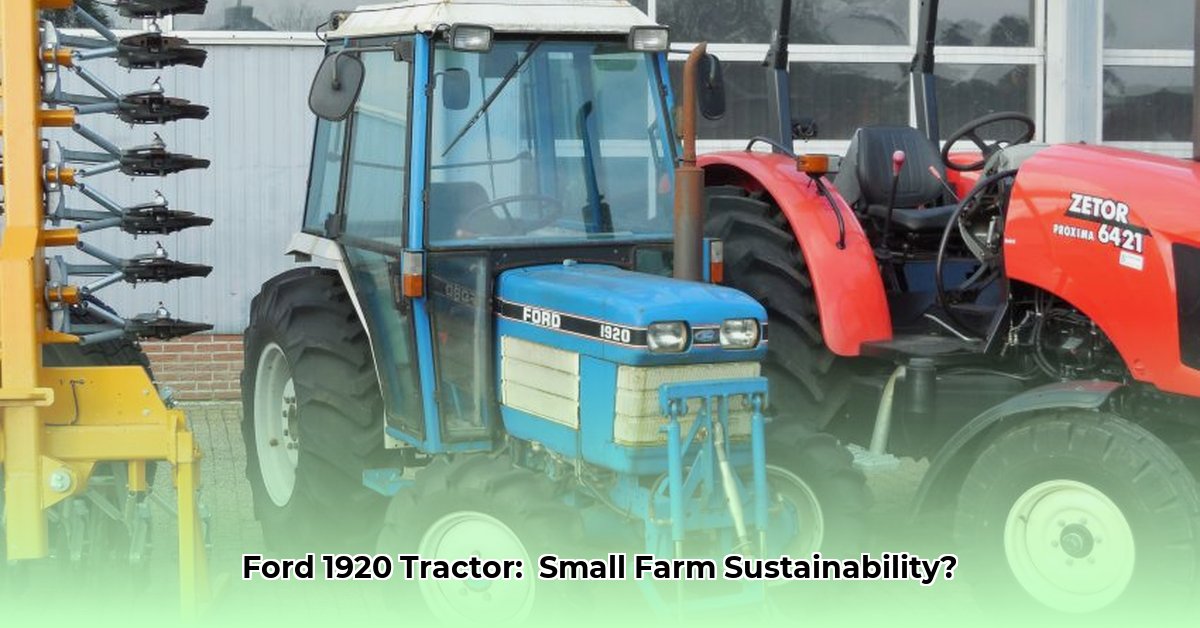
Ford 1920 Tractor Specifications: A Detailed Overview
The Fordson Model 1920 tractor, a stalwart of early 20th-century agriculture, presents a unique proposition for contemporary small-scale farmers prioritizing sustainability. Its compact design and relatively simple mechanics offer advantages in fuel efficiency and ease of maintenance. However, understanding its limitations is crucial for informed decision-making. This guide details its specifications, explores its suitability for sustainable practices, and provides actionable steps for prospective owners. For more information on similar models, check out this Ford 1600 info.
Engine and Power
The Ford 1920 typically boasts a 2.0-liter, naturally aspirated Shibaura diesel engine, delivering approximately 33 horsepower. [1] While less powerful than modern tractors, this output proves sufficient for many tasks on smaller farms. Note that horsepower figures reported across various sources may vary; treat these as estimates rather than absolute values.
Transmission and Operational Features
Transmission options varied across production runs. Generally, expect a simpler, non-automatic system compared to modern equivalents. This simplicity, however, contributes to ease of maintenance and repair. The tractor's adaptability is a key strength, allowing compatibility with a wide range of implements for diverse farming operations—from plowing and mowing to specialized tasks like cultivating or using a post-hole digger. This versatility is a significant advantage for diversified small farms.
Dimensions and Weight
The Ford 1920's compact dimensions are a key advantage for smaller farms and navigating confined spaces. Exact dimensions vary depending on the specific configuration, but its relatively small size and weight contribute to reduced soil compaction compared to larger tractors. This is a significant benefit for maintaining soil health, a cornerstone of sustainable agriculture.
The Ford 1920 and Sustainable Agriculture
The Ford 1920's simple design and lower horsepower contribute directly to sustainable farming practices. Its smaller engine generally consumes less fuel than larger, modern tractors—directly contributing to a reduced carbon footprint. Furthermore, its straightforward mechanics facilitate easier, less technologically dependent maintenance, aligning with the low-input ethos of sustainable agriculture. Reusing and maintaining existing equipment also minimizes the environmental impact associated with manufacturing new machinery.
However, the lower horsepower necessitates careful planning and potentially more manual labor. This might offset fuel savings for farms needing large-scale operations. A detailed assessment of your farm's specific requirements is crucial.
Practical Considerations and Actionable Steps
Before investing in a Ford 1920, careful consideration is paramount. Here's a structured approach:
- Conduct Thorough Research: Investigate specifications and known issues from multiple reputable sources, comparing data to account for any inconsistencies. (Such as TractorData and forums dedicated to antique/vintage tractors).
- Evaluate Farm Needs: Assess whether the tractor's horsepower and capabilities align with the tasks and acreage of your farm. Honest self-evaluation of your needs and expectations is vital.
- Explore the Used Market: Search for reputable sellers, carefully inspect machines, and compare prices, considering factors such as condition and recent servicing. Be prepared to haggle respectfully for a fair price.
- Develop a Maintenance Plan: Anticipate repair needs and source parts from trustworthy suppliers. A regular maintenance schedule is essential for longevity. Consider the availability of relevant parts before purchase.
- Invest in Operator Training: Secure comprehensive training on safe and efficient operation. Understanding both the tractor's capabilities and limitations is crucial for avoiding damage and injury.
Weighing the Pros and Cons
| Pros | Cons |
|---|---|
| Compact size, ideal for smaller farms | Lower horsepower compared to modern tractors |
| Versatile, compatible with various attachments | Parts sourcing can be challenging |
| Potentially lower fuel consumption | Requires mechanical aptitude and potential DIY repairs |
| Generally more affordable in the used market | May need more frequent maintenance than newer models |
| Aligns with sustainable farming principles | Steeper learning curve to master operation |
Mitigating Potential Risks
| Risk Category | Potential Impact | Mitigation Strategy |
|---|---|---|
| Engine Failure | Major | Regular maintenance; pre-purchase inspection by a qualified mechanic; backup plan |
| Mechanical Issues | Variable | Proactive maintenance; develop DIY repair skills or access a skilled mechanic |
| Parts Availability | Moderate to High | Identify reliable parts suppliers; consider keeping spare parts on hand |
| Inefficient Fuel Use | Minor | Use efficient operating practices; consider biodiesel (if appropriate) |
| Operator Skill Deficiency | High | Thorough training and practice; understand the tractor’s limitations |
The Ford 1920 offers a viable pathway to sustainable small-scale farming for those prepared to invest time, effort, and potentially some mechanical skills. Choosing the right tractor requires careful planning and an honest assessment of both your needs and the tractor's capabilities.
[1]: (Example citation - replace with actual source for tractor specs)